Anoka County Attic Heat Buildup During Summer Months
Attic heat buildup in Anoka County during summer months occurs when solar energy heats your roof deck and becomes trapped inside an under-ventilated attic space. In Minnesota summers, attic temperatures routinely reach 150°F to 160°F when ventilation is inadequate. That heat degrades asphalt shingles from below, accelerates adhesive failure in decking, and drives energy costs up as your air conditioner fights the radiant ceiling. Homes built in Anoka County during the 1980s are especially vulnerable because ventilation standards from that era rarely meet today's 1-to-150 net free area ratio.
Why Do Anoka County Attics Get So Hot in Summer?
The Twin Cities metro sits in a climate zone where summer days regularly push into the upper 80s and 90s. When the sun beats down on a dark asphalt shingle roof in Coon Rapids or Blaine, the roof deck surface can reach 170°F or higher. Without adequate airflow pulling that heat out, the attic acts like a sealed oven. Soffit vents bring cool air in, but if ridge or box vents are blocked, missing, or undersized, the hot air has nowhere to escape. The result is a superheated space that bakes everything above your ceiling insulation.
What Temperatures Are Normal Versus Dangerous in an Attic?
A well-ventilated attic should stay within 10°F to 20°F of the outdoor air temperature. On a 90°F July day in Anoka County, a properly ventilated attic should read somewhere around 100°F to 110°F. If your attic thermometer reads 140°F, 150°F, or higher, that is a red flag. Shingle manufacturers typically rate their products for continuous deck temperatures up to around 140°F. Sustained exposure above that threshold causes the asphalt binder to oxidize faster, granules to loosen prematurely, and tabs to curl or crack. You may also void manufacturer warranties if ventilation does not meet minimum code standards.
How Does Heat Buildup Affect Roof Lifespan?
Every degree of excess heat compounds over a roofing season that runs from May through September in Minnesota. A 30-year architectural shingle installed on a poorly ventilated deck in a Fridley or Ham Lake home may realistically deliver only 18 to 22 years of service. The damage is cumulative and largely invisible until shingles begin curling at the corners or granule loss becomes visible in your gutters. Attic Ventilation upgrades address this problem directly by restoring the airflow the system needs to stay within rated temperature ranges. Beyond shingle life, overheated attics also dry out roof deck plywood, causing it to warp or delaminate at seams, which creates fastener pull-through risk at the next re-roof.
Which Anoka County Homes Are Most at Risk?
Homes built between 1975 and 1995 in communities like Coon Rapids, Andover, Anoka, and Ramsey are disproportionately affected. Builders of that era installed soffit vents but often skipped continuous ridge ventilation, relying instead on a small number of box vents that were sometimes blocked during later insulation upgrades. When a homeowner adds blown-in insulation without an insulation dam at the eaves, soffit intake gets choked off entirely. Split-level and hip-roofed homes also present challenges because their geometry limits the length of available ridge and complicates balanced airflow. If your home fits any of these descriptions, a ventilation assessment is worth scheduling before another summer season compounds the damage.
Can Energy Bills Tell You the Attic Is Overheating?
Yes, indirectly. An overheated attic radiates heat downward through your ceiling, increasing the thermal load on your air conditioning system. If your cooling bills in July and August seem disproportionate to your square footage or your home's age, the attic is a reasonable place to investigate. Homeowners in Coon Rapids with poorly ventilated attics sometimes report that the second floor remains uncomfortable even when the thermostat is set low, because the ceiling above the top floor is essentially a radiant panel. Addressing ventilation can meaningfully reduce that load without changing your HVAC equipment.
What Ventilation Solutions Work Best for Minnesota Summers?
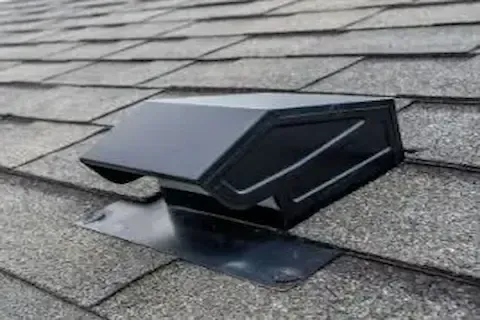
The most effective approach pairs continuous soffit intake with a full-length ridge vent across the peak of the roof. This passive system creates a convective loop: cooler air enters at the soffit, travels along the underside of the deck, and exits at the ridge carrying heat with it. For hip roofs or dormers where a continuous ridge is not possible, a combination of off-ridge vents and power ventilators can compensate. Before choosing a solution, your roof should be evaluated for net free area so you understand the total ventilation deficit you are working with. Understanding your ridge versus box ventilation choice is an important step in that process because mixing vent types incorrectly can actually short-circuit airflow and make the problem worse.
When Should You Call a Roofing Professional?
If your attic shows any of these signs during a summer inspection, contact a qualified roofer: attic temperature readings above 130°F on a moderate summer day, shingle tabs that are curling or brittle at the edges, granule accumulation in gutters after only a few years following a re-roof, or visible moisture staining on rafters that suggests condensation cycles from extreme temperature swings. Anoka County homeowners dealing with these conditions benefit from having a contractor who understands Minnesota's specific climate demands, including freeze-thaw cycles in winter that interact with the same ventilation gaps causing summer overheating.
