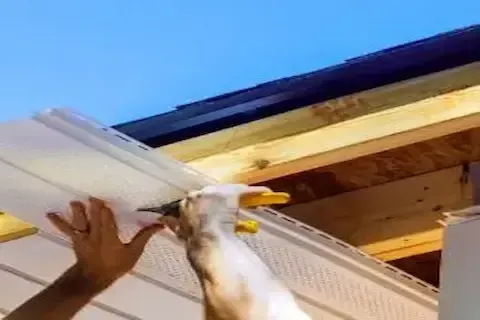
Coon Rapids MN Soffit Damage From Ice Dam Water Backup
Soffit damage from ice dam water backup in Coon Rapids, MN shows up as peeling paint on the underside of your eaves, sagging or buckled aluminum panels, and soft or rotted wood behind the cladding. Ice dams form when heat escapes through your attic, melts roof snow, and refreezes at the cold eave edge. That trapped water backs up under shingles and runs down into your soffit cavity. Homes built in the 1983 era in Coon Rapids are especially vulnerable because original soffit substrates were often 3/8-inch plywood that absorbs moisture quickly and deteriorates without visible warning from the ground.
What Does Ice Dam Water Damage Look Like on Soffits?
The most common signs are paint blistering or peeling on the soffit face, staining along the bottom edge of the fascia board, and panels that flex or bounce when pressed. Inside the eave cavity, you may find black mold growth on the original wood substrate, rust streaking from nails, or insulation that has been pushed down from the attic floor above. In Coon Rapids winters, repeated freeze-thaw cycles accelerate this damage from season to season, so what looks like a cosmetic issue in March often reveals structural rot by the time a contractor opens the panel in May.
Why Are Coon Rapids Homes Particularly at Risk?
Much of the residential housing stock in Coon Rapids was built between 1975 and 1990, a period when attic insulation standards were lower and continuous soffit venting was not always installed correctly. Poor attic airflow means heat accumulates near the roofline, which feeds the ice dam cycle every winter. Neighborhoods near the Rum River corridor and along Hanson Boulevard see especially heavy snowpack on north-facing roof planes, compounding the problem. If your home still has its original aluminum soffit system over a plywood backer, you are likely dealing with hidden moisture damage even if the aluminum face looks intact from the driveway.
How Does Water Actually Travel From the Ice Dam Into the Soffit?
When an ice dam blocks drainage at the eave, water pools on the roof surface and finds any gap it can penetrate. Common entry points include the joint where the roof deck meets the fascia board, nail holes along the drip edge, and any area where roofing felt has lifted with age. Once water gets behind the fascia, it wicks horizontally into the soffit cavity through capillary action. The aluminum panels themselves are not waterproof at the seam joints, so standing water in the cavity saturates the wood backer from the inside out. This is why the visible aluminum can look perfectly fine while the structural substrate behind it is already failing.
What Should You Check Before Calling a Contractor?
You can do a basic assessment from a ladder placed safely at the eave line. Press against the center of each soffit panel — solid panels should feel firm. Soft spots indicate a compromised backer. Look at the fascia paint for horizontal cracking or bubbling, which signals moisture trapped behind the surface. Check the inside corner where the soffit meets the exterior wall for any rust-colored staining or mold. If you see any of these signs on your Coon Rapids home, document them with photos before spring rains arrive and accelerate the deterioration further. For a full evaluation, Soffit and Fascia Replacement professionals can assess both the visible cladding and the structural wood behind it.
Can You Replace Just the Damaged Section or Does Everything Need to Come Down?
Partial replacement is possible when damage is isolated to one or two runs and the surrounding substrate is dry and structurally sound. However, ice dam water rarely damages just one section. Because water travels horizontally through the cavity, a stain you see on one panel often means the adjacent three or four panels are also wet. A contractor will remove the aluminum, probe the wood backer, and determine the extent of rot before recommending a scope. In many Coon Rapids homes built in that 1980s era, the full perimeter fascia board is replaced along with the soffit backer because the fascia has been absorbing water at the drip edge for years before anyone noticed.
What Materials Are Used in a Modern Replacement?
Contractors in this area typically replace rotted wood substrate with either PVC-backed aluminum panels or solid cellular PVC trim boards that do not absorb moisture. Fascia boards are replaced with prefinished aluminum-wrapped wood or full cellular PVC. Vented soffit panels allow proper airflow from the eave into the attic, which is critical for reducing the heat buildup that creates ice dams in the first place. Addressing the soffit and fascia together with proper venting is one of the most effective steps you can take to interrupt the ice dam cycle on a Coon Rapids home. To understand what a full replacement project involves, read more about soffit and fascia replacement work so you know what questions to ask.
Is This Covered by Homeowners Insurance?
Ice dam damage is generally covered under standard homeowners insurance policies in Minnesota when the damage is sudden and accidental. However, insurers will often deny claims if they determine the damage resulted from long-term neglect or deferred maintenance. The distinction matters in Coon Rapids because many homes have had slow moisture infiltration for several winters before the damage becomes visible. Document the damage thoroughly, note the date you discovered it, and contact your insurer before beginning any repairs. A contractor's written assessment describing the extent and likely cause of damage will support your claim during the adjustment process.
