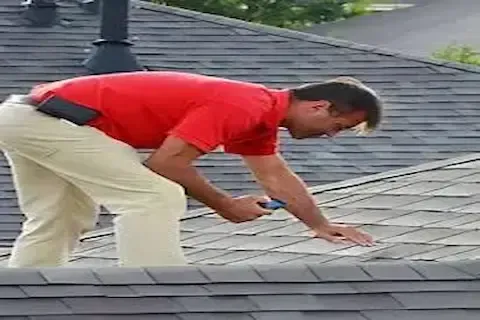
Coon Rapids Roof Inspection After Spring Hail Damage
After a spring hailstorm hits Coon Rapids, your roof may look intact from the ground but carry hidden damage that insurers require documented proof to cover. A professional roof inspection identifies bruised asphalt shingles, granule loss in gutters, dented metal flashing, and impact patterns across the roof field. Without this documentation, most insurance carriers in Anoka County will deny or delay a hail claim. Getting inspected within 30 days of a storm event gives you the strongest possible claim position before seasonal backlogs slow the process further.
What Does Spring Hail Actually Do to Asphalt Shingles?
Hail damage on asphalt shingles is rarely obvious at street level. When hailstones strike shingles, they knock loose the protective granule coating that shields the asphalt mat from UV degradation and water infiltration. What remains is a soft, bruised depression—sometimes called a hail spatter—where the mat is exposed. An inspector pressing on that spot will feel a spongy give rather than the firm resistance of undamaged shingle. In Coon Rapids neighborhoods like Riverdale and Northbrook, inspectors also check for circular impact marks on ridge caps, cracked tab edges, and granule accumulation in gutters and downspout splash pads. All of these are documented with date-stamped photographs that form the backbone of an insurance submission.
Why Does the Timing of a Coon Rapids Inspection Matter So Much?
Minnesota insurance policies typically allow a one-year window to file a hail claim, but waiting extends your risk in two critical ways. First, exposed asphalt mats begin absorbing moisture within weeks of granule loss, accelerating deterioration that adjusters can then attribute to pre-existing wear rather than storm impact. Second, the spring hail season in Anoka County often produces multiple storm events in quick succession. Without a documented baseline from the first storm, it becomes difficult to prove which event caused which damage—a distinction carriers use to limit payouts. Scheduling a Roof Inspection promptly after a named storm event locks in the evidence while conditions are fresh.
What Does a Hail Damage Inspection Actually Cover?
A thorough post-hail inspection in Coon Rapids goes well beyond shingles. Inspectors work through a structured checklist that includes the following areas:
Asphalt shingles: Granule loss mapping, bruise count per square, tab cracking, and lifted edges
Ridge caps and hip shingles: These high-exposure surfaces are often hit hardest and show damage earliest
Metal flashing: Valley flashing, chimney step flashing, and drip edge are examined for pitting and dents
Gutters and downspouts: Dents in aluminum gutters confirm hail size and strike intensity independent of shingle condition
Skylights and vent boots: Cracked plastic lenses and torn rubber boots are common collateral damage points
Soffits and fascia: Painted aluminum soffit panels dent visibly under hail impact and corroborate the inspection report
The inspector records the hail stone diameter using dent-size comparisons on soft metal surfaces—a methodology insurance adjusters recognize as credible evidence.
How Do Coon Rapids Insurers Use the Inspection Report?
When you open a hail claim with your homeowner's insurance carrier, the adjuster schedules their own inspection—often weeks after yours. Having an independent inspection report already in hand does several things. It establishes a documented condition baseline before any further weather exposure occurs. It provides a professional damage count that the adjuster must address point by point rather than dismiss with a general denial. It also identifies any supplemental damage—satellite dish mounts, AC condenser fins, or fence caps—that adjusters commonly overlook on initial walkthroughs in Coon Rapids properties. Carriers operating in Minnesota are required under state statute to respond to claims within specific timeframes, and a well-documented report keeps that process on track.
What Should You Look for Before Calling an Inspector?
You do not need to access your roof to confirm that an inspection is warranted. Walk the perimeter of your home after any hail event and look for these ground-level indicators:
Granules collecting in gutters, at downspout exits, or pooled on concrete below scuppers
Dents on aluminum window screens, garage door panels, or AC condenser fins
Cracked or shattered skylights visible from the yard
Wood fence rails or deck boards showing fresh impact marks
Neighbor activity—when multiple Coon Rapids homes on the same block schedule inspections simultaneously, it signals a genuine event worth documenting
If you see two or more of these indicators, the damage threshold for a viable insurance claim is likely met. Do not wait for a visible interior leak; by that point, secondary damage has already compounded the original hail impact.
How Is Hail Damage Different From Normal Roof Aging?
This distinction is central to every disputed hail claim in Minnesota. Normal aging produces uniform granule loss across the entire roof surface, with granule density thinning gradually from ridge to eave. Hail damage produces a random, scattered pattern of impact points—concentrated in some areas, absent in others—because hailstones fall at angles influenced by wind direction. Older Coon Rapids homes with 15- to 20-year-old roofs often carry both conditions simultaneously: background aging across the field and fresh hail impacts on top of it. An experienced inspector separates these two categories in their report, which is the documentation insurers need to allocate claim responsibility accurately. Reviewing a 1980s home inspection checklist can also help older-home owners in Coon Rapids understand which pre-existing conditions to disclose and which are clearly storm-related.
What Happens If You Skip the Inspection and File Directly?
Filing a hail claim without an independent inspection report leaves the entire documentation burden with the insurance adjuster—a party whose interest is in minimizing claim payouts. Adjusters move quickly, often completing an inspection in under 30 minutes on a full Coon Rapids residence. Without a competing document, every borderline finding defaults to their interpretation. Marginal bruising becomes "granule loss consistent with weathering." Dented flashing becomes "cosmetic and not functionally impaired." Once the adjuster closes the file, reopening it requires proof of new information—exactly the role a pre-claim inspection report would have filled. The cost of a professional inspection is a small fraction of a typical hail claim settlement and is often recoverable within the claim itself as a documentation expense.
What Makes a Coon Rapids Hail Inspection Report Insurer-Ready?
Not all inspection reports carry equal weight with insurance carriers. A report that holds up under adjuster scrutiny in Anoka County will include: the exact date of inspection relative to the storm event, GPS-tagged photographs organized by roof section, a damage count expressed in hits per roofing square, identification of hailstone diameter based on soft-metal impact measurements, and a professional statement distinguishing storm damage from pre-existing wear. It will also reference the NOAA storm data for the specific event date and zip code, which insurers cross-reference to validate the claim. Without these elements, even legitimate damage can be reclassified as maintenance neglect.
